
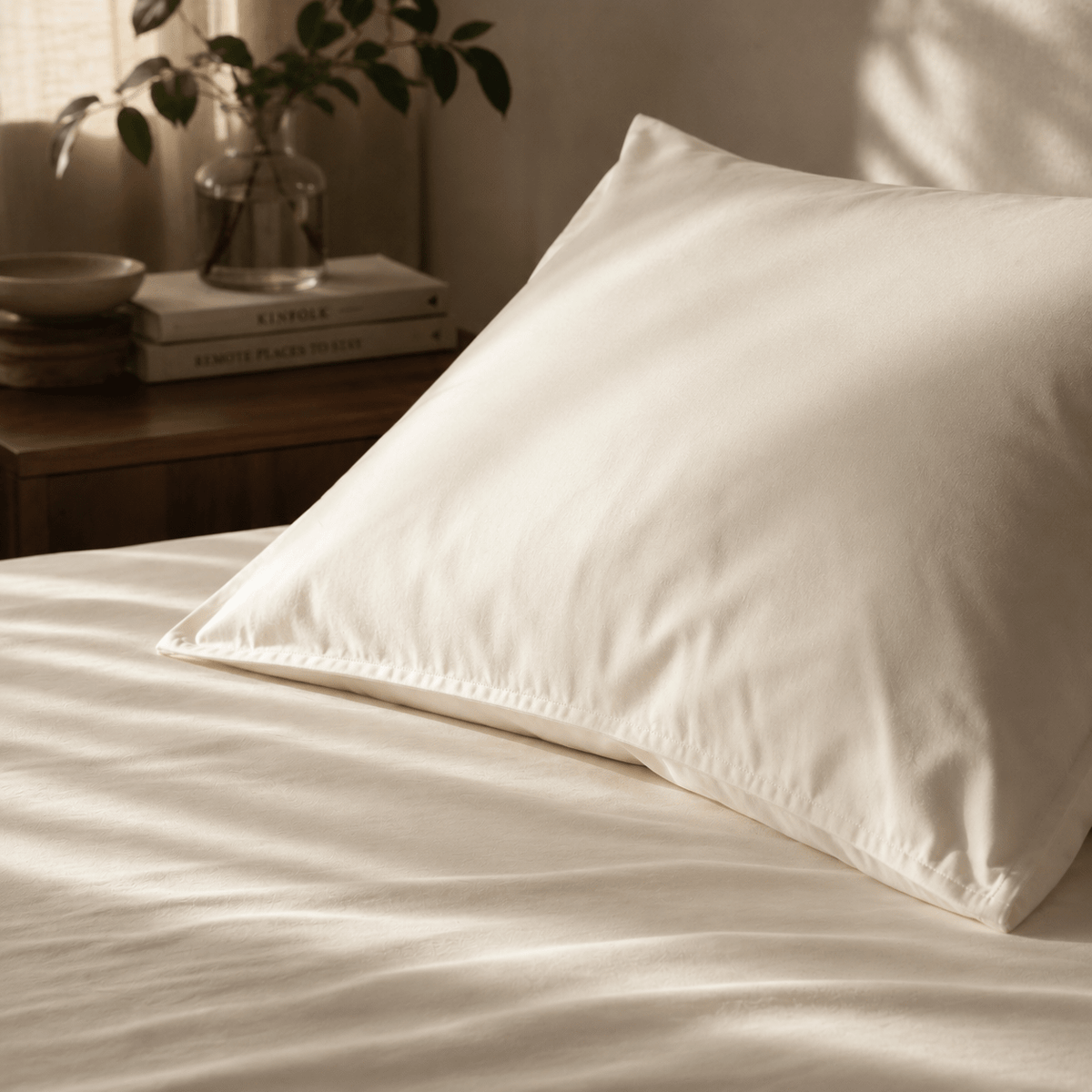
Of everything in your bedroom, your pillowcase touches your face longer than almost anything else you own. Seven or eight hours a night, night after night, your cheek presses into the same few inches of fabric. It is an intimate kind of contact, and yet the pillowcase is often an afterthought — whatever came bundled with the sheet set, changed on laundry day, rarely considered on its own terms.
It is worth a closer look. The fabric your face rests on affects oil transfer, friction, temperature, and how quickly bacteria can build up between washes. None of this calls for anxiety about your bedding — just a little more intention about a surface you already use every single day.
What actually happens between your skin and your pillowcase
Skin releases natural oils and sheds cells overnight, and fabric absorbs both. Over several nights, that buildup mixes with residue from skincare products and hair, creating conditions where bacteria can multiply more easily, especially in warm, humid climates. Dermatologists frequently point to this as one reason breakouts along the cheek and jaw can flare without any change in diet or skincare routine. A clinical study registered with the U.S. National Institutes of Health examined how bedding fabric influenced acne severity over an eight-week period, underscoring that fabric choice and washing frequency are not cosmetic details but measurable factors in skin health (clinicaltrials.gov).
Friction plays a role too. Coarse or synthetic weaves can drag against skin as you shift positions through the night, which is more noticeable on sensitive or acne-prone skin, and can also roughen hair over time by lifting the outer cuticle layer.
Why cotton, and why weave matters
Cotton remains one of the most breathable natural fibres available, drawing moisture away from skin rather than trapping it against the face through a warm night. That breathability matters more in India's climate than in cooler regions, where humidity alone can extend how long oils and moisture sit on skin.
Within cotton, the weave changes how it feels against your face. A percale weave is crisp, light, and matte, with a tighter, plainer construction that feels cool and slightly textured — a good match for warmer nights or oilier skin, since it does not cling. A sateen weave is smoother and slightly glossy, with a gentler, more silk-like glide that can feel kinder to hair prone to tangling or frizz. Neither is objectively better; the right one depends on your skin, your climate, and simply what feels calming to fall asleep against.
What matters more than the weave is the fibre itself. Long-staple, 100% cotton resists pilling and holds its softness through repeated washes, so the surface against your skin stays smooth rather than turning coarse after a few months of use. If you are building out a full set, our home linen collection is organised by weave, so you can match your sheets and pillowcases to how you actually sleep.
How often to change it
Most guidance from sleep health researchers suggests washing pillowcases weekly, more often if you sleep with skincare products on, have oily or acne-prone skin, or live somewhere warm and humid for most of the year. The Sleep Foundation notes that infrequent washing allows oil, sweat, and skin cells to accumulate on bedding surfaces, which can affect both skin and general sleep hygiene (sleepfoundation.org). A simple habit — swapping your pillowcase on the same day you do a load of laundry — is usually enough to stay ahead of it without turning bedding care into a chore.
Caring for a cotton pillowcase
Wash in cool or lukewarm water to protect the fibres, skip fabric softener, which coats cotton and reduces its natural breathability, and let it air dry or tumble dry on low. Rotating between two or three pillowcases, rather than relying on just one, makes weekly washing easier to sustain and gives each one more time to rest between wears.
A small ritual, not a rule
None of this needs to become another thing to optimise. The idea, in keeping with how we think about the rest of a bedroom, is simply to notice what is already touching you every night and choose it with a little more care. A breathable, well-made cotton pillowcase is a small, quiet upgrade — the kind that does not announce itself but that your skin and hair notice over time. For more on choosing fabric that suits how you actually live, our journal has further reading on weave, thread count, and care.