
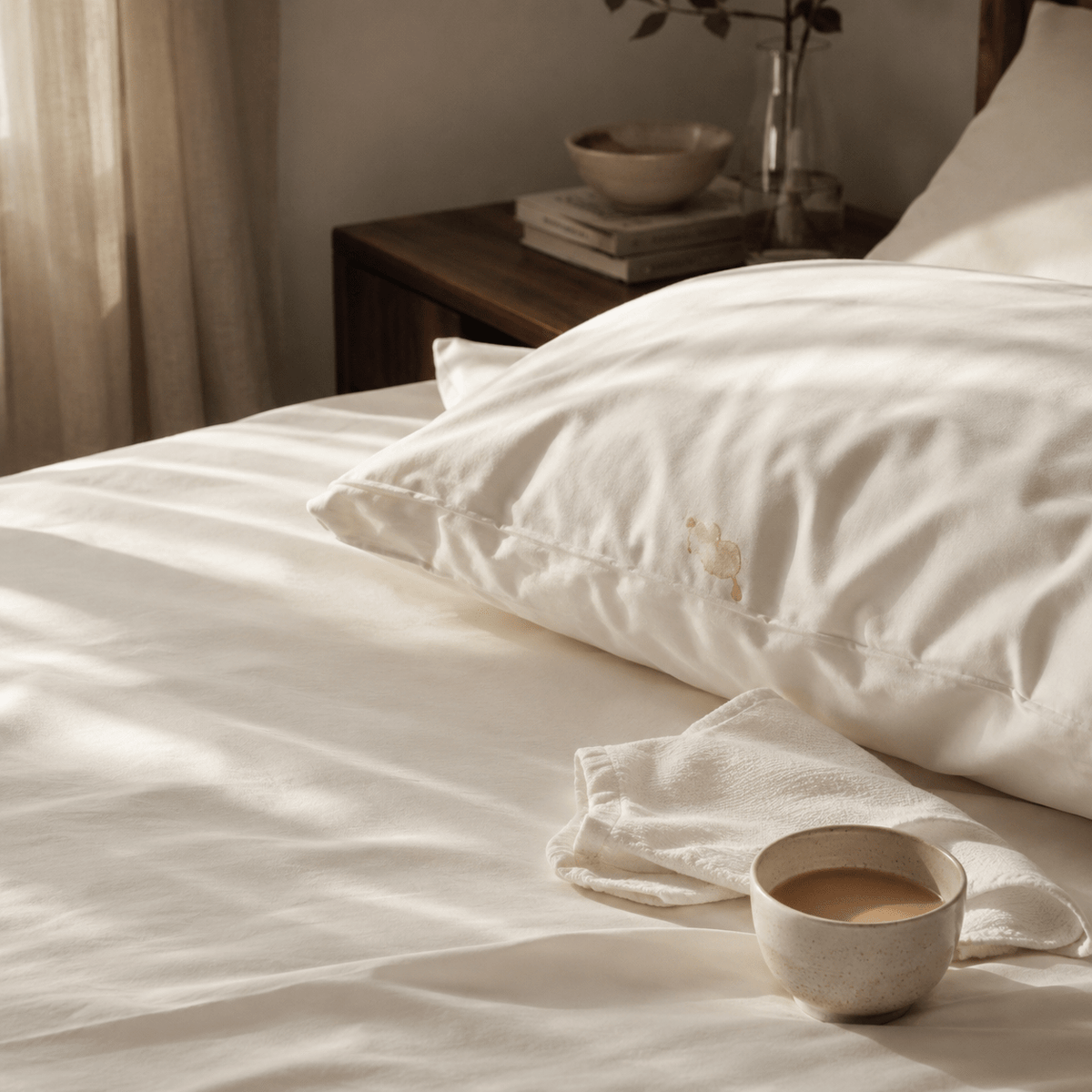
Even the calmest bedroom has its small mishaps: a spot of chai on the pillowcase, a trace of turmeric from last night's dinner, the faint yellow shadow of a night's sweat on a hot Mumbai evening. Stains on cotton bedsheets are not a failure of care, they are simply what happens when fabric does its job of touching skin, absorbing moisture, and living alongside you. The question is not how to keep sheets pristine forever, but how to treat them gently enough that they keep softening with every wash instead of wearing thin.
Why cotton holds on to stains the way it does
100% cotton is a natural, absorbent fibre. It welcomes moisture readily, which is part of why it feels so good against skin through humid nights, but the same absorbency means oils, proteins, and pigments settle into the weave quickly if left untreated. Heat makes this worse. A stain washed in hot water before it has been identified can "cook" proteins from sweat or blood directly into the fibre, setting what could have lifted out easily in cold water. The first rule of stain care on cotton, whether it is a percale weave or a sateen one, is patience before heat.
A gentle order of operations
Most stains respond well to a simple sequence, done as soon as you notice them:
- Scrape or blot off anything sitting on the surface, rather than rubbing it further into the weave.
- Rinse the reverse side of the fabric under cool running water, so the stain is pushed out rather than through.
- Apply a small amount of mild liquid detergent directly to the mark and let it sit for ten to fifteen minutes.
- Wash in the coolest water the care label allows, and check the spot before it goes anywhere near a dryer or hot iron, since heat can set a stain permanently.
The American Cleaning Institute's stain removal guide follows a similar principle across fabrics: act quickly, treat before laundering, and always check that a stain is fully gone before drying, since heat locks in what water alone might have released.
Working through the stains that actually show up on Indian bedsheets
Sweat marks, the faint yellowing along a pillowcase or the centre of a fitted sheet, usually respond to a paste of baking soda and water left on for twenty minutes before a cool wash, or a soak in water with a spoon of white vinegar if the fabric can tolerate it.
Turmeric and food stains lift best if treated within a few hours, before the pigment oxidises and darkens. A dab of mild detergent worked in with cool water, followed by a spell of sunlight while damp, does more than most stain removers, since UV light naturally breaks down turmeric's colour compounds.
Oil-based marks, from skincare, hair oil, or a late-night snack, need detergent rubbed directly into the dry stain before any water touches it. Water alone tends to spread oil rather than lift it.
Blood, if it happens, wants cold water only, immediately. Warm or hot water is the one thing guaranteed to set it permanently.
Odour is a different problem than staining
Sheets can smell faintly of the day long after any visible mark is gone, because odour usually lives in oils and skin cells trapped deep in the weave rather than on the surface. A cup of white vinegar added to the rinse cycle, or an extra rinse cycle altogether, helps release what a single wash misses. Letting sheets dry fully in open air rather than folding them away slightly damp also prevents the musty note that comes from trapped moisture. Sleep Foundation's washing guidance notes that sweat and body oils build up on bedding steadily overnight, which is why a weekly wash matters more for freshness than any single stain-removal trick.
What to avoid
Bleach is tempting for a stubborn mark but breaks down cotton fibres over time and will yellow the fabric with repeated use, especially on the softer sateen weaves. Hot water and high dryer heat are the fastest way to set a stain rather than remove it. And scrubbing hard at a wet mark tends to push it deeper into the weave and fray the surface fibres, which is often where pilling starts. Gentle, repeated, cool treatment beats force every time.
A note on weave
Percale, being a tighter, plain weave, tends to release stains a little more readily since there is less surface texture for particles to cling to. Sateen's softer, looser weave holds a slight sheen and drape that many people love, but it can hold onto oil-based marks a touch longer, so a little extra soak time helps. If you are choosing your next set with easy care in mind, it is worth browsing the percale collection alongside the sateen collection to feel the difference for yourself before deciding.
None of this needs to become a chore. A stain is simply a small pause, a moment to slow down, treat it with care, and let the fabric do what good cotton does: soften, absorb, and settle back into the quiet rhythm of your bed. For the full range of weaves, weights, and textures we carry, our home linen collection is a good place to start, and there is more on caring for natural fibres over on the journal.