
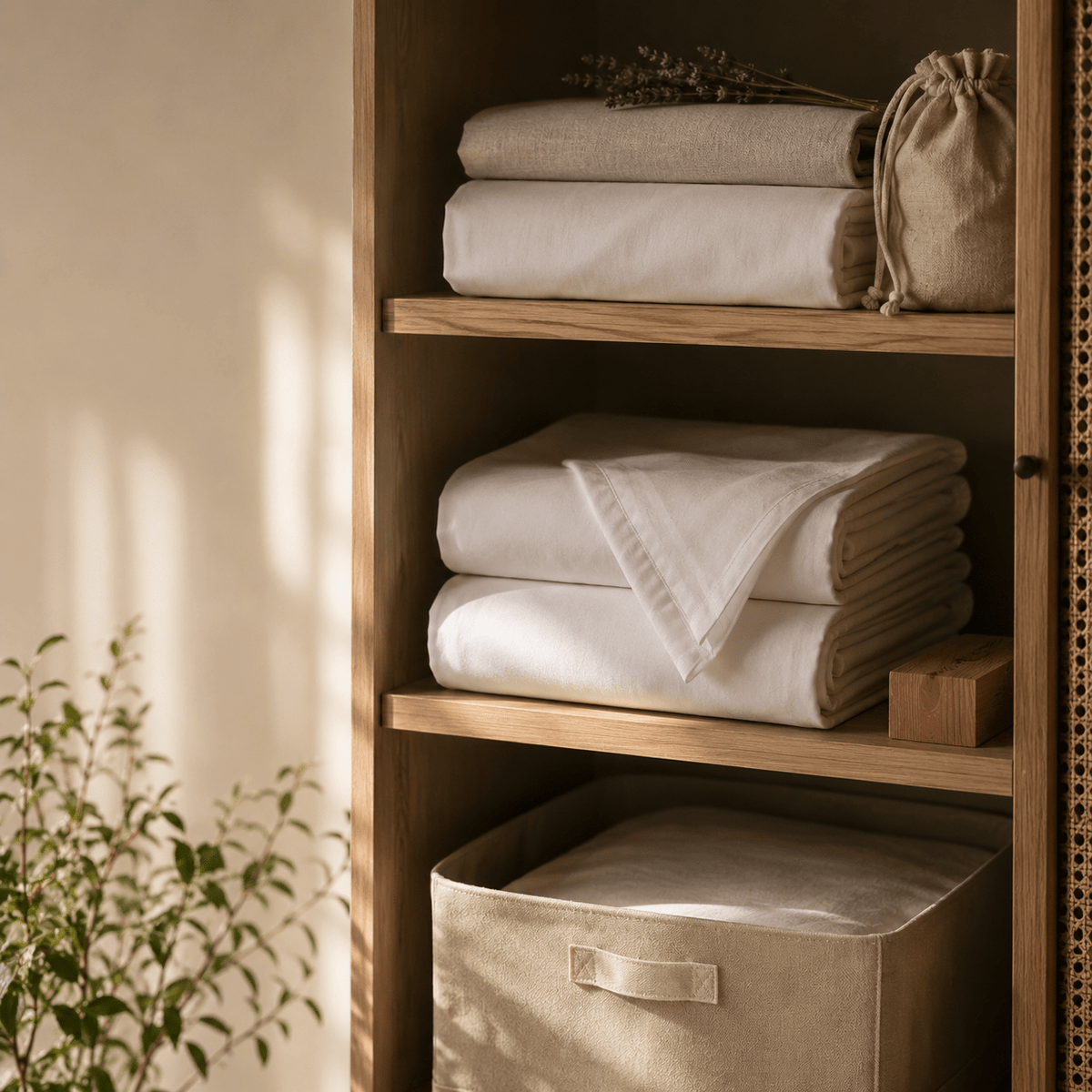
Most of the care we give our bedsheets happens in the wash. We choose a gentle detergent, we mind the water temperature, we fold them warm off the line. But there is a quieter stretch of a sheet's life that gets far less attention: the weeks it spends folded in a cupboard, waiting to be used again. In much of India, where humidity swings widely between seasons, this waiting period can do more damage to good cotton than a hundred wash cycles.
Storage is not a footnote to bedsheet care. It is part of it.
Why storage matters more here than the care label admits
Cotton is a natural fibre, and like most natural fibres, it is hygroscopic — it absorbs moisture from the air around it. In a coastal city or during monsoon months, a linen cupboard can sit at a humidity level far above what's comfortable for stored fabric, even if the room feels dry to the touch. The CDC recommends keeping indoor humidity at or below 50 percent specifically to prevent mould growth on materials like fabric and upholstery. Cross a threshold like that for long enough, folded in the dark with no airflow, and a set of sheets can pick up a musty smell or, worse, faint mildew spotting long before it shows visible wear.
This is why a sheet can come out of storage smelling "off" even though it went in clean. The problem usually isn't the wash — it's what happened after.
Fold with airflow in mind
The instinct is to fold sheets as flat and compact as possible, the way they arrive from a shop. For everyday storage, resist this. A few adjustments make a real difference:
- Fold loosely rather than tightly. Tight folds trap air (and moisture) inside the layers, where it has nowhere to go.
- Store a flat sheet, fitted sheet, and pillowcases together as one set, but don't compress them under heavier linens.
- Leave a little room between folded sets on the shelf. Sheets stacked wall-to-wall with no gap behave like a single dense block with no ventilation.
- If your cupboard tends to feel damp, refold and air out stored sets every few weeks rather than leaving them untouched for a whole season.
What to avoid
Plastic storage bags and vacuum-sealed pouches are useful for out-of-season blankets, but they work against you with cotton sheets in a humid climate. Sealed plastic traps whatever moisture was already in the fabric and gives it nowhere to escape — which is precisely the condition mildew needs. A breathable cotton or muslin storage bag, or simply an open shelf, does a far better job of letting a sheet exhale.
Mothballs are another common habit worth reconsidering. They do keep insects away, but the smell embeds itself in cotton fibres and can take several washes to fully lift — not a pleasant thing to discover the first night you use a "fresh" set. A cedar block or a small sachet of dried lavender does similar work without the lingering chemical scent, and it's a small, quiet ritual in itself: tucking something fragrant between folded linen before you close the cupboard.
Rotate rather than store one set for months
Sheets that are used and washed regularly rarely develop storage problems, simply because they don't sit still long enough to. The sets most likely to smell musty are the ones kept for guests or "good occasions" and left folded for months at a time. If you can, keep two or three sets from your home linen collection in rotation rather than one in daily use and others in deep storage. It's gentler on each set individually, and it means nothing sits unused long enough for humidity to become a problem.
This also happens to be a good argument for owning fewer, better sheets rather than a large, rarely-touched collection — one of the quieter principles behind slow living at home. Caring well for a few things tends to serve you better than owning many things carelessly.
A note on weave
Crisp percale and the smoother, denser sateen weave slightly differently, but both are long-staple cotton and both benefit from the same storage principles: loose folding, breathable bags, and regular rotation. Neither needs anything more elaborate than that — just a cupboard that lets fabric breathe and a habit of not letting any one set sit untouched for too long.
A small, unhurried habit
None of this requires new equipment or a weekend project. It's really just a shift in attention — folding a little more loosely, choosing cloth over plastic, tucking in a cedar block, giving a cupboard some air on a dry day. Small, steady acts of care, applied consistently, are what keep good linen good for years rather than seasons. If you'd like more on caring for cotton bedding well, our journal has further reading on washing, weave, and the everyday rituals that make a home feel unhurried.