
Bedsheets
Sleep in
something beautiful.
100% natural cotton — no synthetic blends, no chemical finishes — in calm, plain colours that get softer with every wash. Sateen and Percale weaves.
Rated 5.0 by verified homeowners across India
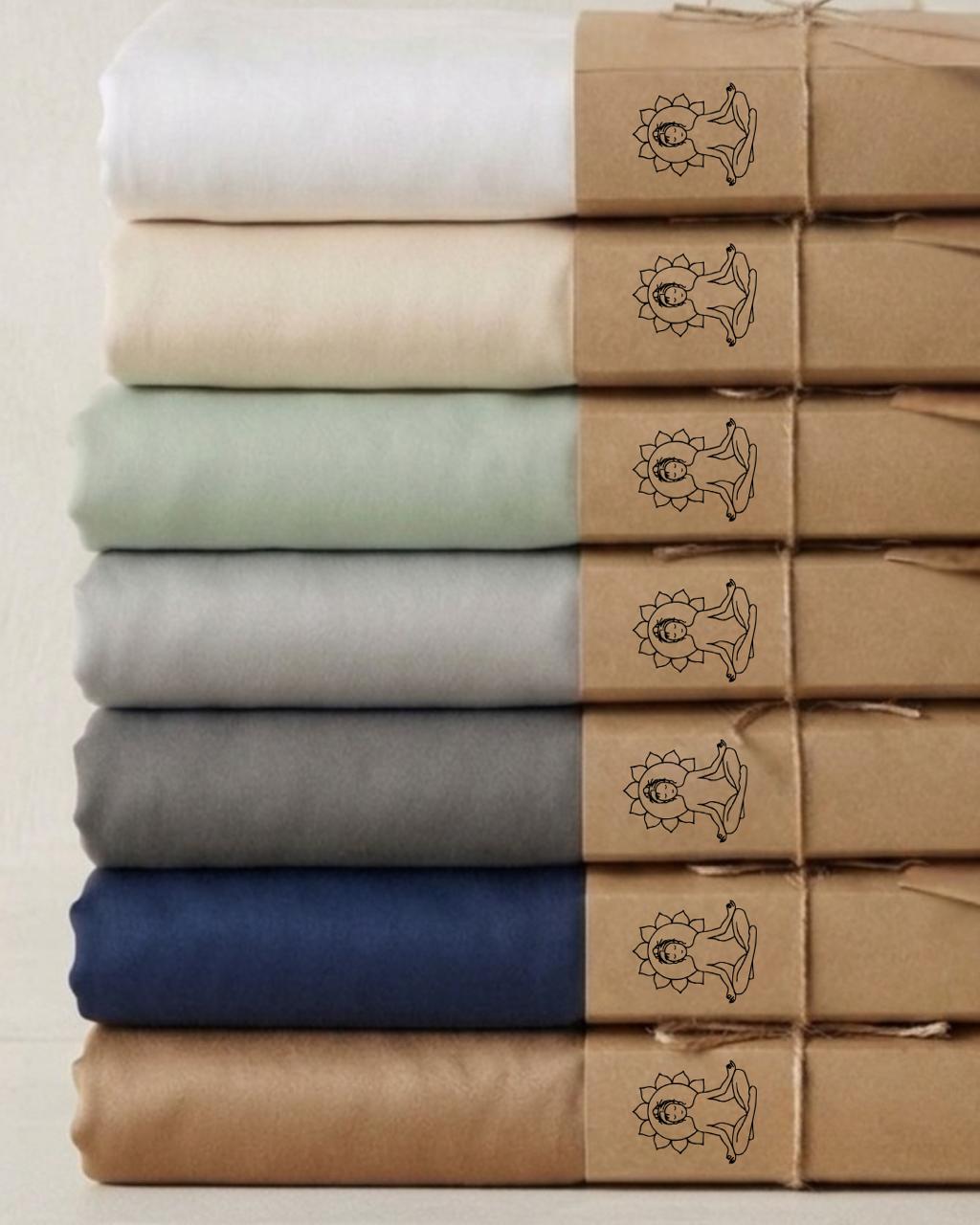
100% Natural Cotton
No synthetic blends — pure cotton from field to bed.
Two Weaves
Sateen · Percale
Calm Palette
Plain colours for a decluttered, breathable home.
Free Shipping
Free on orders above ₹2,999 · Cash on Delivery available.
All Bedsheets
Choose your
weave.
 Cotton Percale
Cream Beige Percale Cotton Bedsheet
Cotton Percale
From Rs. 1,500.00
 Cotton Percale
Silver Grey Percale Cotton Bedsheet
Cotton Percale
From Rs. 1,500.00
 Cotton Sateen
Champagne Beige Sateen Cotton Bedsheet
Cotton Sateen
From Rs. 1,500.00
 Cotton Sateen
Deep Plum Sateen Cotton Bedsheet
Cotton Sateen
From Rs. 1,500.00
 Cotton Sateen
Midnight Navy Sateen Cotton Bedsheet
Cotton Sateen
From Rs. 1,500.00
 Cotton Percale
Serene Green Percale Cotton Bedsheet
Cotton Percale
From Rs. 1,500.00
 Cotton Percale
Dark Grey Percale Cotton Bedsheet
Cotton Percale
From Rs. 1,500.00
 Cotton Percale
Golden Sand Percale Cotton Bedsheet
Cotton Percale
From Rs. 1,500.00
 Cotton Percale
Navy Blue Percale Cotton Bedsheet
Cotton Percale
From Rs. 1,500.00
 Cotton Percale
Pearl White Percale Cotton Bedsheet
Cotton Percale
From Rs. 1,500.00
Washing
Cold wash, gentle cycle
Wash at 30°C or below to preserve the weave and colour.
Drying
Line dry in shade
Avoid direct sunlight and tumble drying to maintain softness.
Ironing
Medium heat while damp
Iron on medium setting while slightly damp for best results.
Questions & Answers
Everything You're Wondering About Our Bedsheets
Straightforward answers about fabric, care, and what to expect from 100% cotton bedding.
Choosing the Right Sheet
What makes a cotton bedsheet genuinely good quality?
Beyond thread count (which is heavily overmarketed), real quality comes down to three things: the grade of cotton used, the weave construction, and how well the finishing holds up after washing. Our sheets use long-staple cotton in either a Sateen or Percale weave — both chosen for durability and feel, not just numbers on a label.
What's the difference between Sateen and Percale weaves?
Percale is a crisp, cool, matte-finish weave — it feels clean and breathable, like a well-pressed shirt, and gets softer with every wash. Sateen uses a different over-under pattern that creates a subtle sheen and a silkier, slightly warmer hand feel. Hot sleepers or those who prefer no-fuss: Percale. Those who want something that feels more luxurious against the skin: Sateen.
What thread count should I be looking for?
For quality cotton, 200–400 is the sweet spot. Above 400, manufacturers often use multi-ply threads to inflate the number — this doesn't improve feel and can make the fabric heavier and less breathable. A well-woven 280TC Percale will outperform a poorly-made 800TC sheet on every metric that matters.
How do I identify genuinely 100% cotton sheets?
Look at the fabric composition label — it should say 100% cotton with no mention of polyester, microfibre, or "cotton-rich." Real cotton breathes, wrinkles a little, and gets softer over time. Blended or synthetic sheets often feel slick, resist wrinkling artificially, and trap heat. We list full fabric composition on every product page.
Are cotton sheets good for sensitive skin?
100% cotton is one of the best choices for sensitive skin — it's breathable, naturally hypoallergenic, and doesn't trap heat the way synthetic fabrics do. It also doesn't build up static, which can irritate skin. Our sheets contain no harsh chemical finishes.
Can I use cotton sheets year-round?
Yes — especially Percale weave, which is one of the most climate-versatile fabrics for bedding. It breathes in summer and layers well in winter. Sateen is slightly warmer due to its denser weave, making it particularly well-suited to cooler months, though many people use it all year.
Care & Maintenance
How do I wash cotton sheets to keep them soft?
Wash in cold or warm water (not hot) on a gentle cycle. Use a mild detergent without optical brighteners or bleach — these break down cotton fibres over time. Tumble dry on low or line dry. Avoid fabric softener regularly; it leaves a coating on fibres that actually reduces softness and breathability over time.
Will cotton sheets shrink in the wash?
New cotton sheets may shrink slightly (1–3%) on the first wash — this is normal with natural fibres. Washing in cold water and drying on low heat keeps any shrinkage negligible after the first cycle. We size our fitted sheets with enough ease to account for this.
How do I prevent cotton sheets from pilling?
Pilling is usually caused by friction from washing with rougher fabrics or running too hot and fast. Wash sheets separately, use a gentle cycle, and avoid high heat drying. Long-staple cotton pills far less than short-staple varieties — the fibre length matters as much as the weave.
How do I make new cotton sheets softer faster?
Simply wash before first use — this removes any residual finishing treatment and begins the natural softening process. A common trick: add half a cup of white vinegar to the first wash cycle (no detergent) to strip manufacturing residues. After that, each wash makes them progressively softer. Percale in particular becomes noticeably better after 5–10 washes.
How often should I replace cotton bedsheets?
With proper care, quality cotton sheets should last 3–5 years of regular use — sometimes longer. Signs it's time to replace: fabric is noticeably thinning, has developed small holes, or the elastic has lost its stretch. We make sheets to last, not to be replaced every season.
How should I store cotton sheets when not in use?
Store in a cool, dry, well-ventilated space — not sealed plastic bags, which trap moisture and can cause yellowing or mildew. A linen closet shelf or a breathable cotton storage bag works well. A useful trick: fold one sheet and store the full set inside the matching pillowcase — keeps everything together and neat.
Comfort & Sleep
Are cotton sheets better than microfibre or polyester?
For most sleepers, yes — and meaningfully so. Cotton breathes; synthetic fabrics don't. That means cotton regulates temperature naturally — absorbing and releasing moisture as your body temperature shifts through the night. Polyester and microfibre feel soft initially but trap heat, build static, and degrade much faster.
What makes cotton sheets feel luxurious?
The combination of fibre quality, weave precision, and finish. Long-staple cotton produces longer, smoother fibres that sit together more neatly — resulting in a smoother, more uniform surface. Weave quality determines drape and how the sheet moves with you. What makes a sheet feel quietly made is mostly about how it feels over time, not the look on the shelf.
Do high thread count sheets sleep cooler?
Counterintuitively, no — very high thread count sheets are often denser and trap more heat. For hot sleepers, a lower thread count Percale weave (crisp and breathable) will consistently outperform a 1000TC Sateen. Breathability comes from the weave structure and fibre quality, not thread density.
How many sets of bedsheets do I actually need?
Three sets per bed is the practical ideal: one on the bed, one in the wash, one in reserve. This rotation extends the life of each set and means you're never waiting for sheets to dry. Two sets works fine if your laundry routine is consistent.