
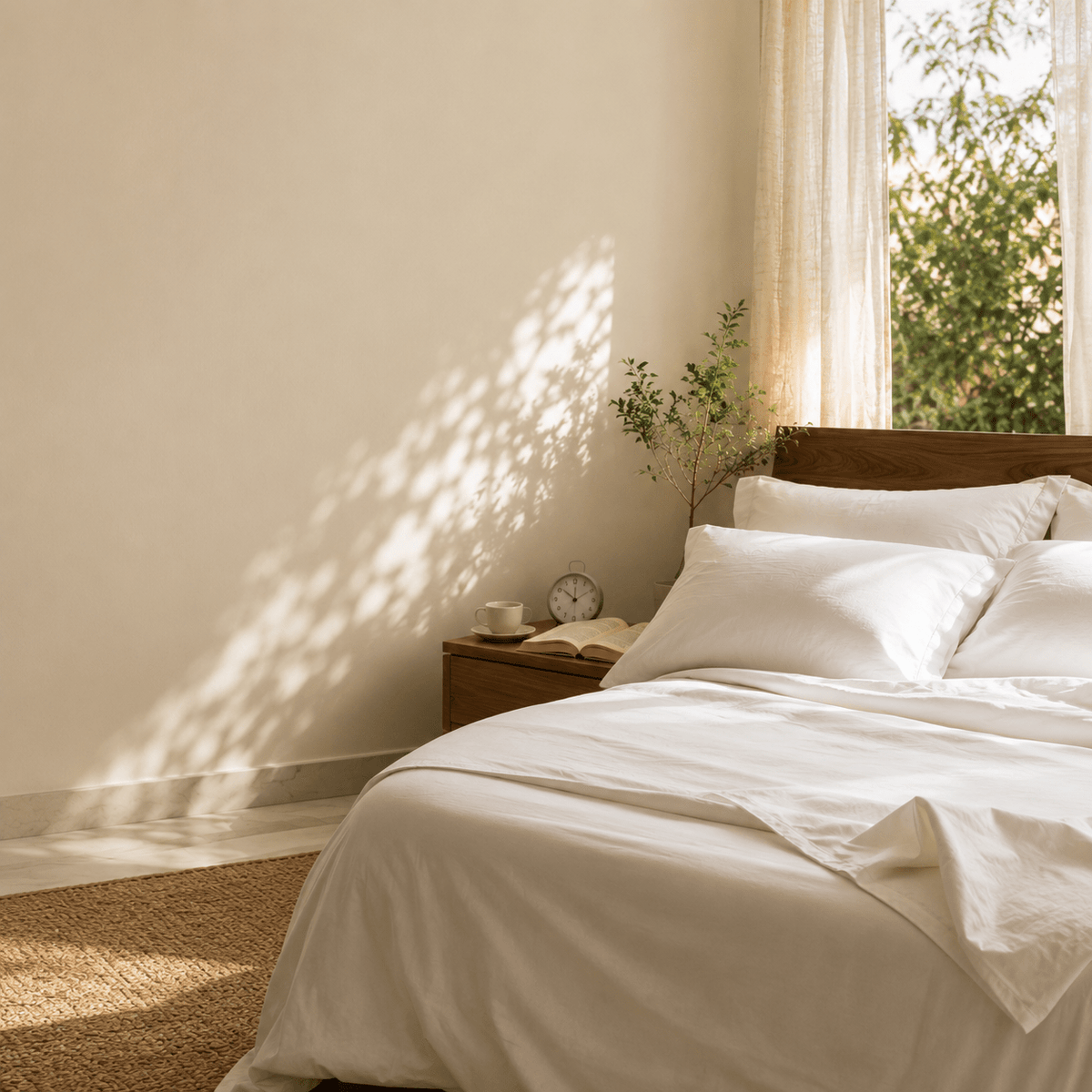
Changing your bedsheets is one of those small, easy-to-postpone tasks. There is no obvious deadline for it, unlike laundry piling up in a hamper. But the sheets you sleep on every night quietly absorb sweat, skin cells, oils, and dust hour after hour, and how often you change them has a real effect on sleep quality, skin health, and the general sense of calm a bedroom can hold. This is less about a strict rule and more about building a rhythm that suits your climate, your household, and the fabric you sleep on.
The general rule of thumb
Most sleep and health experts agree on a simple baseline: wash and change your sheets about once a week. The Sleep Foundation recommends a weekly change for most people, with more frequent washing if you have pets on the bed, sweat heavily, or deal with allergies or asthma. Left unwashed, sheets accumulate dust mites, dead skin cells, and bacteria, which the Cleveland Clinic notes can contribute to skin breakouts and allergy flare-ups over time.
A week is a useful starting point, but it is not a universal answer. It is a guideline built largely around climates that are cooler and drier than most of India. Here, the calculation shifts.
Why India's climate changes the math
Heat, humidity, and dust all accelerate the reasons sheets need changing in the first place.
- Sweat and heat. Warmer nights, especially without air conditioning, mean more perspiration soaking into the fabric. In peak summer months, many households find every-week washing isn't quite frequent enough.
- Monsoon humidity. Damp air slows down how quickly sheets dry after washing and gives dust mites and mildew more favourable conditions to thrive between washes.
- Dust and air quality. In many Indian cities, ambient dust settles on bedding faster than in low-dust climates, adding another layer of everyday grime.
- Air-conditioned rooms. Cooler, drier air from AC use can reduce sweat but tends to dry out skin, making the texture and cleanliness of your sheets more noticeable against the skin.
None of this means overhauling your routine into something complicated. It simply means treating the weekly rule as a floor, not a ceiling, and adjusting upward during hotter, more humid stretches of the year.
Signs it's time, even before the week is up
- A faint mustiness when you get into bed, even after a normal day.
- Visible sweat marks or discolouration, especially in a shared bed or during a heatwave.
- New or worsening skin irritation, breakouts, or itchiness with no other clear cause.
- A pet has been sleeping on the bed more than usual.
- Someone in the house has been unwell, since sheets can hold onto germs during recovery.
Why the fabric you choose makes the habit easier
How often you're willing to change your sheets often comes down to how easy the fabric makes the process. Sheets that trap heat and moisture feel unpleasant well before a week is up, which quietly discourages the habit rather than supporting it. Breathable, 100% cotton bedding, by contrast, wicks moisture and releases heat rather than holding onto it, so sheets feel fresher for longer and wash and dry easily when it's time.
Within cotton, the weave matters too. A crisp percale weave is light, matte, and especially breathable, a good match for hot, humid nights. A sateen weave has a smoother, slightly lustrous feel and drapes beautifully, while still being fully cotton and comfortably breathable for most of the year. Neither traps heat the way synthetic blends can, and both hold up well to frequent washing without pilling or thinning quickly.
Building a simple rotation
The easiest way to keep a consistent changing schedule, rather than letting it slip during a busy week, is to own at least two full sets of sheets from your home linen collection. One stays on the bed while the other is washed and ready to go back on, so a change never depends on same-day laundry. A third set is worth having for the peak of summer or monsoon, when you may want to change sheets more than once a week.
A gentle closing thought
Slow living isn't about ignoring practical upkeep in favour of atmosphere. It's about choosing routines that are easy enough to keep, so the care becomes automatic rather than a chore you dread. A clean, breathable bed is one of the quieter forms of self-care in a home, and it is worth treating with the same unhurried attention as the rest of your evening. For more on building calm, intentional habits around rest and the home, visit the Unhurried Life journal.