
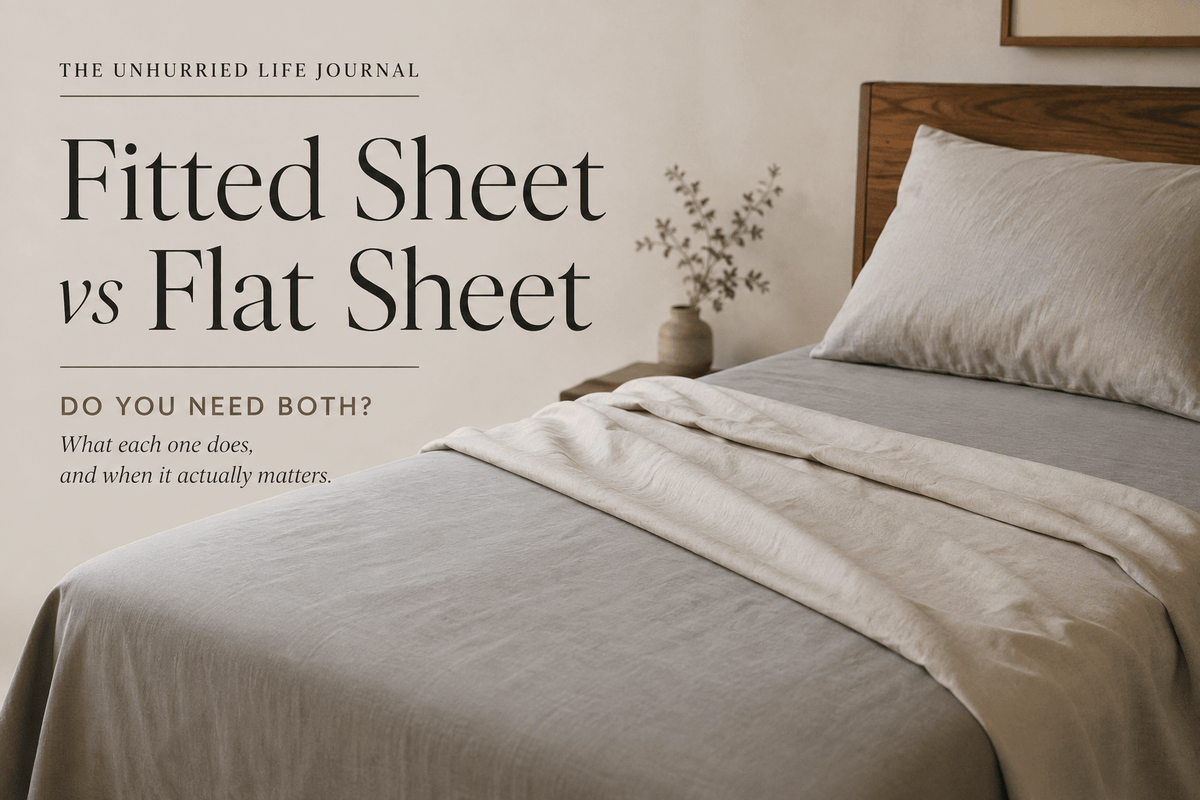
Somewhere between childhood and adulthood, most of us inherited a made bed without ever learning why it was made that way. A fitted sheet stretched tight over the mattress, and, in many Indian homes, a flat sheet tucked in on top, doing a job nobody quite explained. If you have ever wondered whether that second sheet is doing anything at all, you are asking a fair question.
What a Fitted Sheet Is For
A fitted sheet is the non-negotiable layer. Its elasticated corners hug the mattress, creating the surface your body actually touches through the night. It absorbs sweat, skin oils, and the general wear of sleep, and because it is washed often, it protects the mattress underneath from all of that. If you owned only one sheet, it would be this one.
What a Flat Sheet Adds
A flat sheet sits above you, between your body and your blanket, quilt, or duvet. Its job is quieter but still useful: it keeps the heavier layer on top clean, so you can wash a light sheet weekly instead of laundering a bulky comforter every few days. It also gives you a simple way to adjust warmth through the night, pulling it up alone on a mild evening, adding the blanket only when it turns cooler, without committing to a whole extra layer of bedding.
The Sleep Foundation's comparison of flat and fitted sheets makes a similar point: a flat sheet is not strictly essential, but it does reduce how often you need to wash bulkier bedding, which matters more in humid Indian climates, where anything heavy takes longer to dry properly.
So, Do You Need Both?
It depends on what else is already on your bed.
- If you sleep with a duvet inside a washable cover, a flat sheet is optional. The cover is already doing the protective work.
- If you sleep under a quilt, blanket, or comforter without a cover, a flat sheet is worth keeping. It is far easier to strip and wash a sheet weekly than to launder a quilt every few days.
- If you are a hot sleeper, or live somewhere with high humidity for much of the year, a flat sheet alone, with no blanket at all, is often the most comfortable setup for eight or nine months of the year.
- If you tend to get tangled in extra layers overnight, you are not wrong to skip it. Plenty of people sleep perfectly well with just a fitted sheet and a light duvet.
There is no universal answer here, and that is fine. Bedding is meant to adapt to how you actually live and sleep, not the other way around. The Unhurried Life journal exists partly to work through small, practical questions like this one, rather than assume a single setup fits every home.
Choosing the Right Weave for Each
Once you have decided what you need, weave matters more than most people expect. A crisp percale weave is a natural fit for a flat sheet. Its matte, breathable finish stays cool against the skin even as a top layer, and it softens beautifully with each wash rather than pilling or clinging in the heat.
For a fitted sheet, many people prefer the smoother drape and subtle sheen of a sateen weave, especially through the cooler months, when that extra softness against bare skin feels particularly welcome. Both weaves are 100% cotton, so the choice comes down to feel and season rather than quality. It is worth browsing the full range of home linen to compare them side by side before deciding what belongs on your bed.
A Simple Way to Decide
If you are setting up a bed from scratch, start with one good fitted sheet. That is the layer doing the real work, night after night. Add a flat sheet if your top bedding is not already protected by a cover, or if you simply enjoy the quiet ritual of a fully dressed bed. Either way, wash your sheets on a steady rhythm. The Sleep Foundation recommends washing bedsheets weekly, a habit that is far easier to keep up with when the sheet closest to your skin is a light, quick-drying cotton rather than something heavier.
None of this needs to be complicated. A bed is not a performance. It is a place to rest. Choose the layers that make that easier, and let the rest go.