
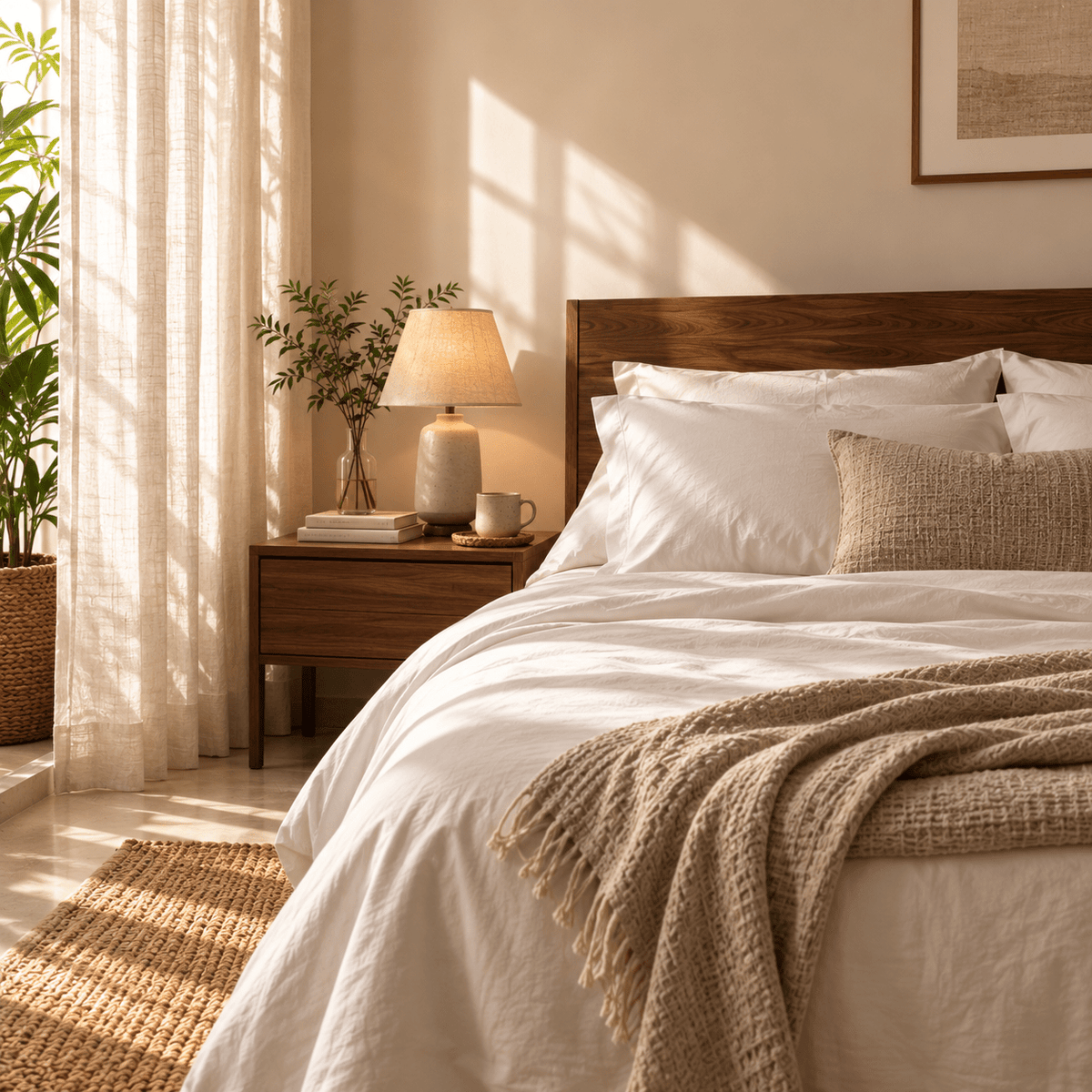
It's easy to assume a calm bedroom is an expensive one — the kind styled for a magazine spread, with everything matched and nothing out of place. In practice, the opposite is usually true. A room that feels unhurried has less to do with how much was spent and more to do with where it was spent. Once you know which elements actually shape how a bedroom feels, the budget tends to take care of itself.
Start with what touches you, not what you can see
The instinct when decorating on a budget is to fix what's visible first — a headboard, a rug, a set of frames for the wall. But the things you're in direct contact with for seven or eight hours a night shape how rested a room feels far more than anything decorative does. This is the one place worth spending deliberately: good bedsheets in a natural fibre like 100% cotton, sized correctly for your mattress, and cared for properly, will do more for a room than a new piece of furniture.
If you tend to run warm through the night, a crisp percale weave is worth the extra spend over a cheaper polyester-cotton blend. If you prefer a softer, slightly warmer hand-feel, a sateen weave earns its place. Either way, one well-made set that lasts years costs less, over time, than three cheap sets replaced every season.
What the research says actually matters
Beyond bedding, the Sleep Foundation's overview of bedroom environment factors is a useful budget filter: temperature, light, noise, and air quality consistently show up as the elements with the most measurable effect on sleep, ahead of anything purely aesthetic. None of these require a large outlay. Blackout curtains, a fan or a simple air purifier, and keeping the room a few degrees cooler at night do more for how a bedroom feels than a styled vignette on a shelf. It's worth reading their full breakdown at sleepfoundation.org/bedroom-environment before you spend on anything else.
Where a modest budget goes furthest
- Lighting layers, not fixtures. A warm-toned bedside lamp on a dimmer plug does more to soften a room in the evening than an expensive ceiling light. Avoid cool white bulbs near the bed.
- One good textile, not several decorative ones. A single well-made throw or cushion cover in a natural fibre reads as considered. Five mismatched decorative pieces read as cluttered, however inexpensive each one was.
- Empty wall space. Leaving a wall bare costs nothing and often does more for a sense of calm than filling it. Restraint is a legitimate design choice, not a placeholder for a future purchase.
- Storage that closes. A basket or box that hides daily clutter is a small spend with an outsized effect on how settled a room looks at a glance.
Where to hold back
Statement furniture, matching decor sets, and trend-driven colour palettes age quickly and are the easiest places to overspend without much return. A headboard, a large rug, or an accent wall can wait — none of them affect how you sleep, and all of them are simple to add later once the fundamentals are in place. Buying these in a rush, before the room's basics are settled, is usually what leads to a bedroom that looks decorated but doesn't feel calm.
Slow decorating, not slow motion
Building a bedroom this way isn't about moving slowly for its own sake — it's about sequencing spend so each purchase earns its place before the next one arrives. Start with linen and sleep environment, live with the room for a few weeks, and let what's still missing become obvious rather than guessed at. For more on building a home around fewer, better-considered choices, the journal has further reading on furnishing a space with intention rather than urgency.