
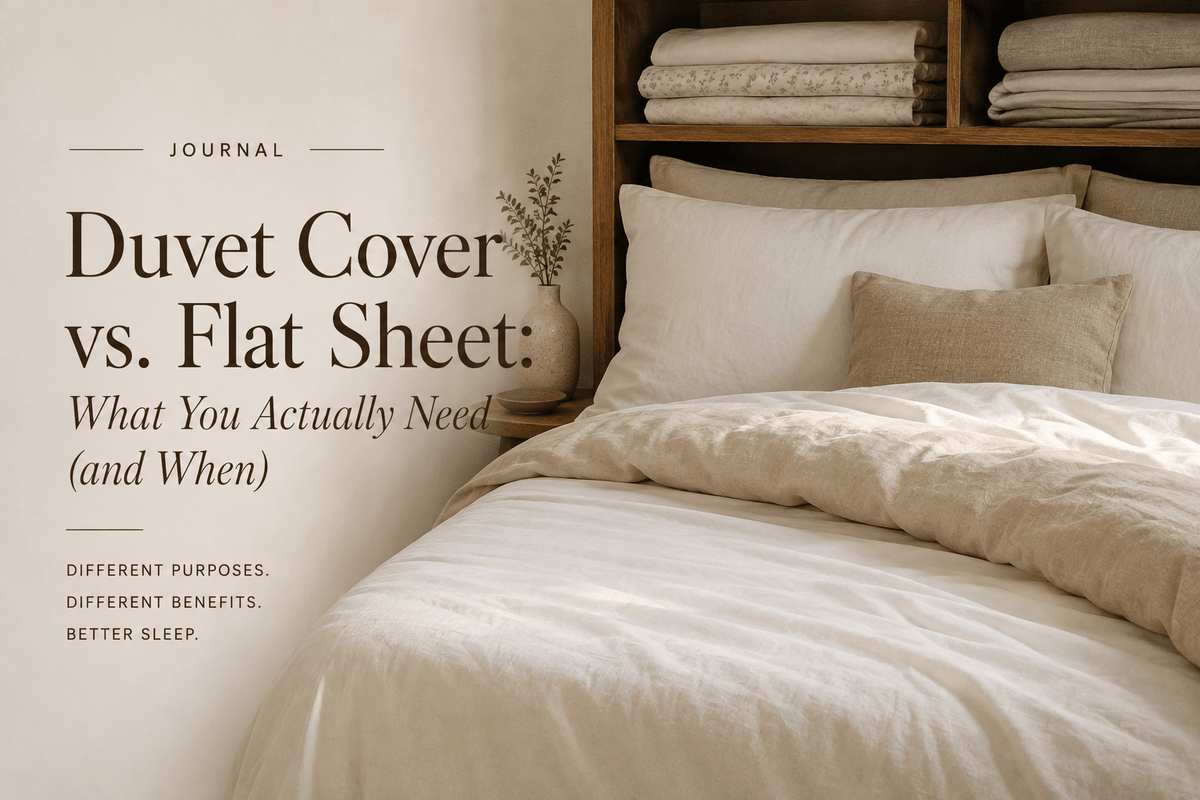
Stand in front of a shelf of bedding, or scroll through one online, and the question tends to surface quickly: do you need a duvet cover, a flat sheet, or both? The two are often used interchangeably in conversation, which only adds to the confusion. They serve different purposes, and once you understand what each one actually does, the choice becomes much simpler.
What a Flat Sheet Does
A flat sheet is the layer that sits directly against you, between your body and whatever else is on the bed, whether that is a quilt, a duvet, or nothing at all in warmer months. Its job is mostly about touch and hygiene: it is the surface your skin meets most often through the night, and the layer that absorbs the most from your body, oils, sweat, and skin cells, over a week of sleep. Because it is washed most frequently, a flat sheet is usually made from a breathable, easy-care weave. This is where the choice between percale, crisp and cool, and sateen, smoother and slightly warmer to the touch, matters most, since it is the fabric that will be closest to you, night after night.
What a Duvet Cover Does
A duvet cover has a different job. It is a fabric envelope that wraps around a duvet or comforter insert, protecting it and giving it a washable outer layer. Duvets themselves, whether down, fibre-fill, or cotton-filled, are bulky and impractical to wash often, so the cover exists precisely so you do not have to. It also does the most visual work in a bedroom: the pattern, colour, and texture of a duvet cover set the tone of the whole room in a way a flat sheet, tucked beneath everything, rarely can.
Do You Need Both?
Not always, and not everyone does. If you sleep with a duvet or comforter as your primary layer, a duvet cover is doing real work: it keeps the insert clean and lets you change the mood of a room without buying a new duvet. A flat sheet in that setup is optional but useful, adding a washable barrier between you and the duvet cover that is easier to launder weekly than a bulky cover on its own.
If your household does not use a duvet at all, and many Indian homes layer with a well-made cotton bedsheet and little else for much of the year, a flat sheet alone is often all you need. There is no rule that a bed must have both. The right setup depends on climate, season, and how much bulk you actually want on the bed.
Choosing for an Indian Climate
This is where geography matters more than convention. Bedding layers do more than furnish a room: research on bedroom temperature and bedding choices shows that what is on the bed measurably affects how well a person sleeps, not just how the room is set. In humid coastal cities, a heavy duvet and cover combination can feel like overkill for most of the year. A breathable cotton flat sheet, alone or with a light cotton quilt in winter, tends to sleep cooler and dry faster after washing, which matters through the monsoon. Cotton remains one of the best-studied materials for bedsheets, valued for the way its fibres circulate air and pull moisture away from the body rather than trap it.
In drier, colder regions of the country, a duvet and cover make more sense through winter months, with a flat sheet layered underneath for hygiene and a lighter percale sheet alone once the weather turns. Air-conditioned bedrooms fall somewhere in between: a duvet cover with a lightweight insert, or simply a flat sheet with a cotton quilt, both work, depending on how cold the room runs at night.
A Simple Way to Decide
If you are starting from scratch, begin with the flat sheet. It is the layer that touches you most and does the most for sleep hygiene, since bedding retains sweat, skin cells, and allergens over time regardless of what else sits on top of it. Add a duvet cover only if you are using a duvet or comforter as your main layer, mostly for the seasons when you actually need that warmth. There is no need to buy both simply because they are often sold together; buy what your climate and your season call for.
This is, in a way, the same principle that runs through most decisions about a slow, considered home: fewer things, chosen for what they actually do, rather than a full set bought out of habit.