
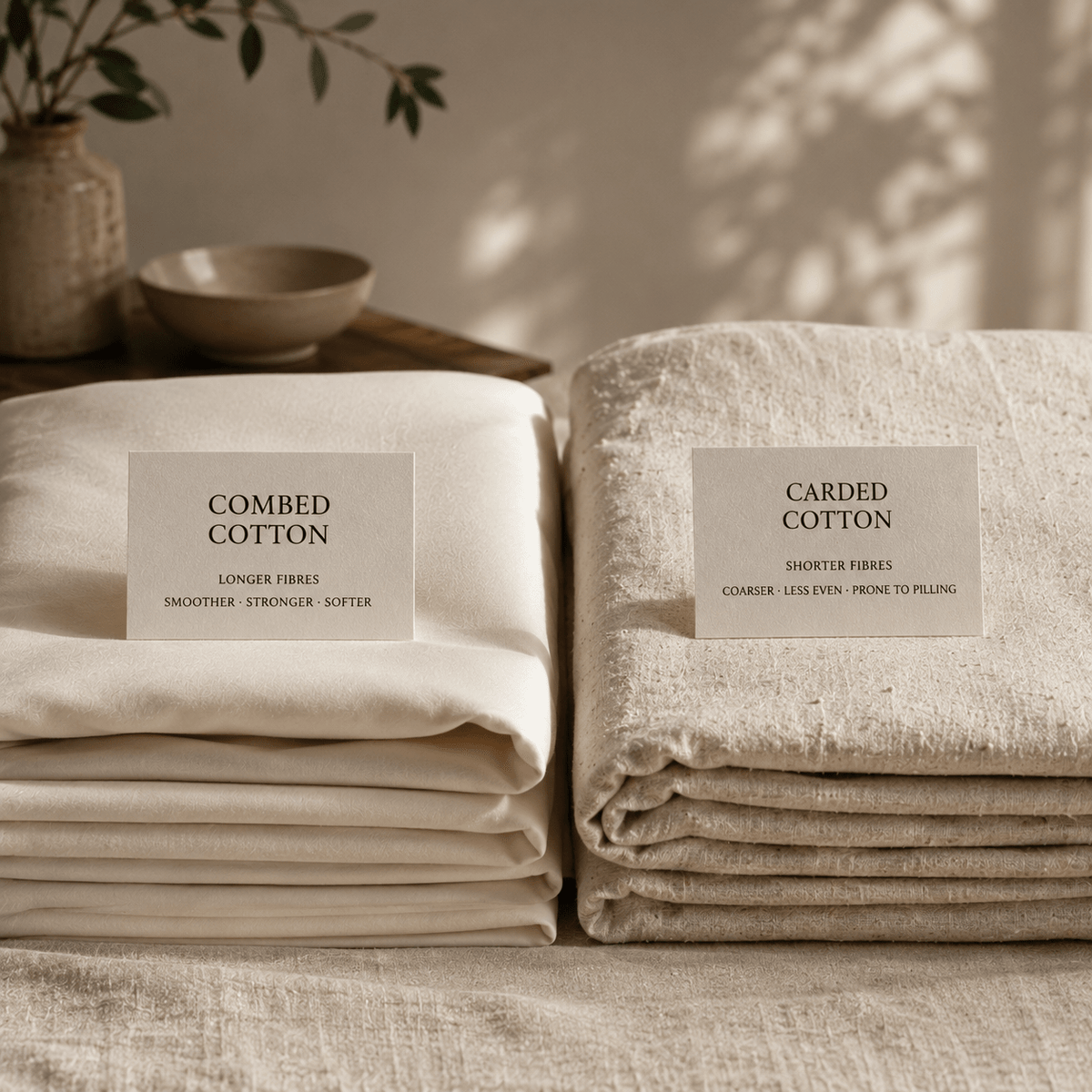
Somewhere between the cotton field and your bed, a fabric label learns to say a great deal while explaining very little. "100% cotton" tells you what a sheet is made of, but not how it was made — and that second question is often the one that decides whether a sheet feels soft and settled after a year, or thin and scratchy after a few washes. One of the quietest, most consequential steps in that process is whether the yarn was carded or combed.
What "Carded" and "Combed" Actually Mean
Every cotton fiber starts the same way: picked, cleaned, and passed through a carding machine that untangles the fibers and aligns them roughly into a loose rope, called a sliver. For carded cotton, that's essentially the end of the road before spinning — the yarn still contains a mix of long and short fibers, along with small tangles known as neps.
Combed cotton takes one extra step. The carded sliver is passed through a combing machine that removes the shorter, weaker fibers and straightens what remains into long, parallel strands before it's spun into yarn. According to Cotton Incorporated's research on cotton spun yarns, reducing short-fiber content this way improves yarn strength and evenness, and enhances the finished fabric's appearance and drape.
Why It Matters for How a Sheet Feels
Short fibers are the reason a lower-quality cotton sheet can feel rough or start pilling within a few months. They work loose from the yarn, break, and gather into tiny balls on the fabric surface. Because combing removes most of these short fibers before spinning, combed cotton yarn is smoother, more even, and less prone to pilling — which is part of why it's the standard choice for finer, longer-lasting bedsheets, whether woven as a crisp percale or a lustrous sateen.
Carded cotton isn't a lesser fiber, exactly — it's the same raw cotton, just less refined in processing. It's a reasonable choice for everyday, budget-conscious textiles, but it will generally feel coarser to the touch and show wear sooner than a combed yarn of the same origin.
Where You'll See It on a Label — and Where You Won't
Here's the frustrating part: "combed cotton" is far more commonly printed on a label than "carded cotton" is. Brands using combed yarn tend to say so, because it signals quality; brands using carded yarn often simply say "100% cotton" and leave it there. If a label doesn't mention combing at all, it's worth asking, or looking for other quality markers — long-staple fiber sourcing, a finer thread count within a single weave type, or a mill's own quality documentation.
This is also why thread count alone is an unreliable shorthand for quality. A high thread count woven from carded, short-fiber yarn can still feel inferior to a slightly lower thread count woven from combed, long-staple cotton. The processing behind the number matters as much as the number itself.
Combed Cotton and Longevity
Because combed yarns shed less lint and hold their structure better wash after wash, sheets made from them tend to soften gradually over years rather than thinning out. If you've ever wondered why one set of sheets in your linen collection is still holding its shape after seasons of use while another has gone limp and bobbly, the combing step is very often the quiet reason.
It's a small detail, but it's very much in keeping with an unhurried approach to a home — choosing fewer things, made well, that are worth living with for a long time rather than replacing often.
So, Which Should You Choose?
If you're buying sheets you intend to keep for years, combed cotton is worth seeking out and worth the modest difference in price. It's a more considered use of the same raw fiber, meant to age well rather than wear out quickly. Carded cotton has its place in more disposable textiles, but a bed — where you spend roughly a third of your life — is a reasonable place to choose the version that was made with a little more care.
For more on how weave, weight, and fiber quality come together in a good night's sleep, browse the rest of the journal.