
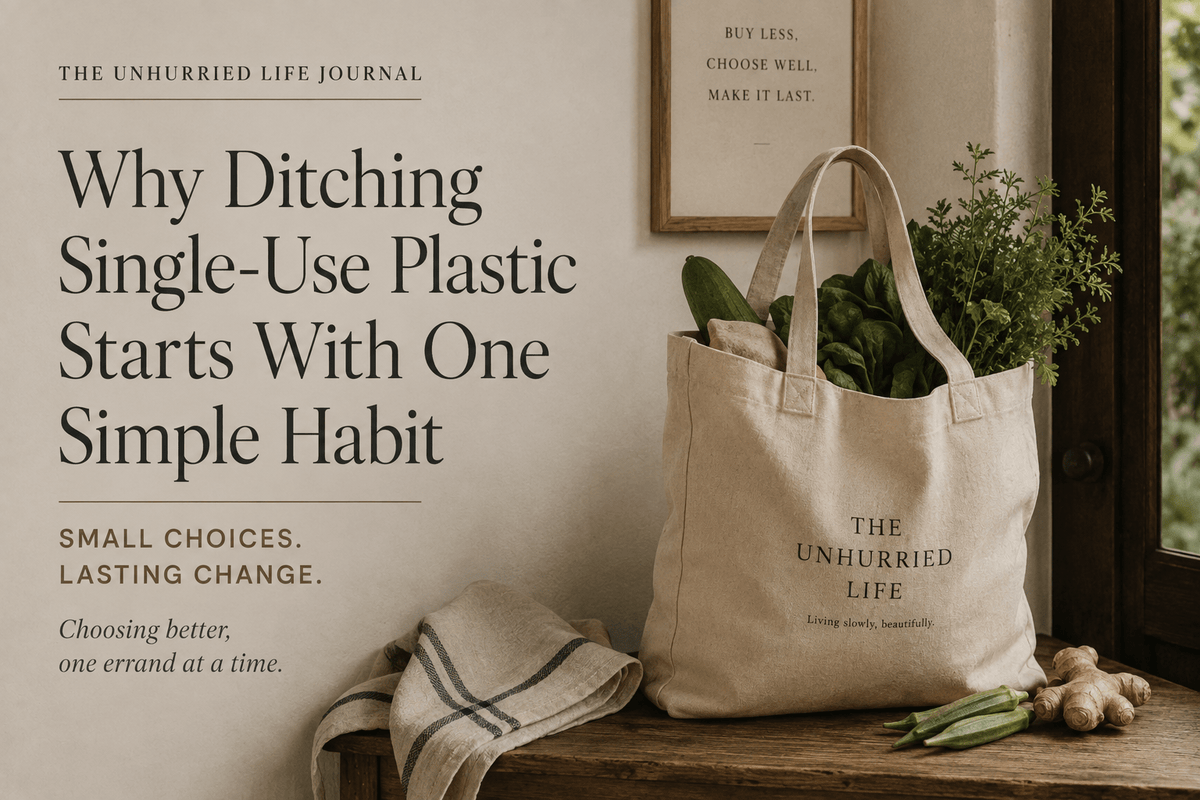
Most single-use plastic doesn't arrive as a decision. It arrives as a habit — the bag handed over at the vegetable stand, the one that comes free with a quick pharmacy run, the extra layer wrapped around something that didn't need it. None of it feels like a choice in the moment. Add it up over a year, though, and the numbers are hard to look away from.
The Scale of What We're Actually Talking About
India generates roughly 5.5 million tonnes of single-use plastic waste every year, ranking third globally by volume, even as its per-capita plastic use remains far below that of wealthier nations. Nearly 40% of all plastic waste in the country comes from single-use items — bags, wrappers, cutlery, packaging designed to be touched once and thrown away. According to Down To Earth's reporting on India's plastic crisis, the country mismanages an estimated 85% of the plastic it generates — much of it dumped or burned at roadsides, or washed into drains and rivers before it ever reaches a recycling facility.
None of this is a reason for despair, and it isn't really about any one household. It's about a system built on convenience, and how a few repeated, unglamorous choices can quietly opt out of it.
Why "Single-Use" Became the Default
Plastic bags are cheap to produce, light to transport, and require no thought at the point of use — which is precisely why they became the default. A cotton tote, by comparison, asks something of you: you have to remember it, carry it, wash it occasionally. That small friction is exactly the point. It turns an unconscious habit into a deliberate one, which is a fair description of what slow living asks of most choices, not just this one.
There's also a quieter myth worth naming: the assumption that a plastic bag, once used, gets responsibly recycled somewhere out of sight. In practice, thin single-use plastic is rarely economical to recycle, which is part of why so much of it ends up mismanaged rather than reprocessed. It isn't a reason to feel guilty about past bags taken without a second thought — it's simply a reason to stop assuming "recyclable" means the problem has already been handled for you.
What a Canvas Tote Actually Changes — and What It Doesn't
It's worth being honest here: a cotton tote isn't free of environmental cost either. Growing and weaving cotton uses water and energy, and a tote manufactured and then forgotten in a drawer after two uses does very little good. The UN Environment Programme's guidance on reducing single-use plastic is clear that reusable bags only deliver their benefit when they're actually reused — again and again, for years, not weeks.
That's the part worth committing to. A well-made canvas tote that lives by your door or in your bag for years replaces hundreds of single-use bags over its lifetime. The goal was never to own more reusable things — it was to stop reaching for disposable ones, one errand at a time.
Making the Habit Actually Stick
Good intentions rarely survive a busy Tuesday, so the habit has to be built into places you'll actually be, not just places you plan to be. A few things that make it easier in practice:
- Keep one tote folded into your everyday bag, so it's never a separate thing to remember.
- Leave a second one by the front door or in the car, for the errands that come up unplanned.
- Choose a tote sturdy enough to hold vegetables and groceries without stretching or tearing — a flimsy one gets abandoned within a month.
- Wash it occasionally rather than replacing it. A canvas tote is meant to age, not to be disposable itself.
None of this requires willpower so much as it requires the tote being in the right place before you need it — which is really a design problem, not a discipline problem.
Small, Repeated Choices
This is really the same principle behind everything in a slow, considered home: fewer things, chosen well, used for a long time. The same thinking that goes into choosing bedsheets that are meant to outlast a decade applies just as well to the bag you carry groceries home in. Neither is about perfection. Both are about building a habit that doesn't ask you to think twice — because by then, it's just how you do things.
For more reflections on building a slower, more intentional home, visit our journal.